




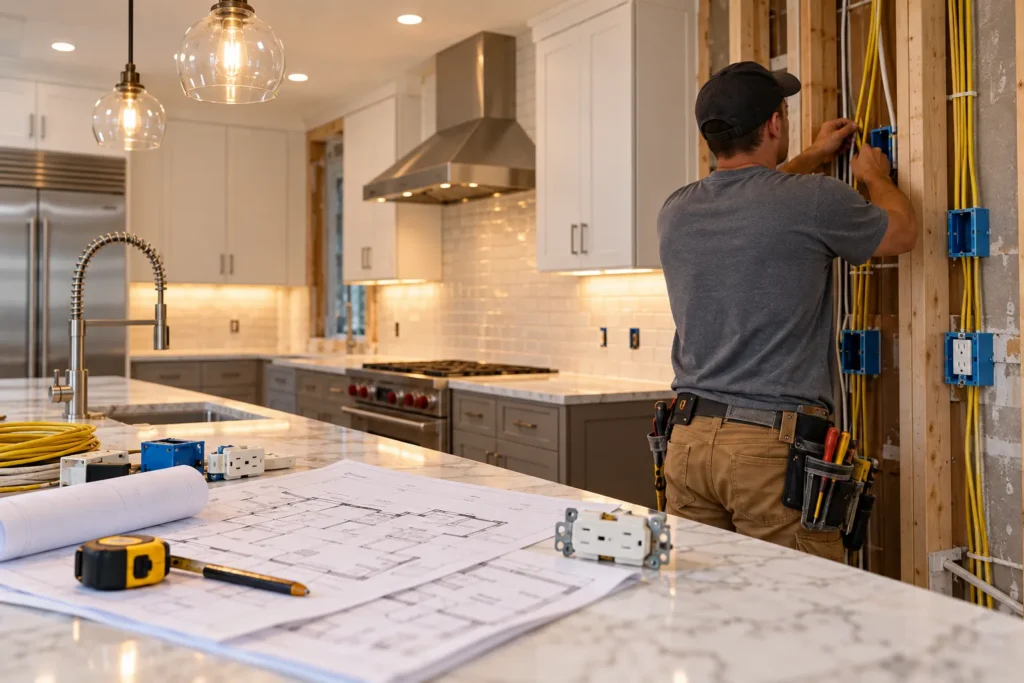
You should upgrade the electrical during a kitchen remodel if your current system cannot safely support it. Older wiring, overloaded circuits, new appliances, and changes to the kitchen layout may require upgrades. Even when major rewiring isn’t necessary, electrical improvements can make the kitchen safer and more functional.
A kitchen remodel is also a good time to inspect electrical systems. Open walls make it easier to add wiring, outlets, and lighting before cabinets and finished surfaces are installed.
Quick Takeaways
- Not every kitchen remodel requires a complete electrical upgrade.
- Older wiring and overloaded circuits may need attention.
- Major kitchen appliances often need dedicated circuits.
- GFCI and AFCI protection may be required for certain kitchen circuits.
- New appliances and layout changes can increase the amount of electrical work.
- A kitchen remodel does not automatically require an electrical panel upgrade.
Should You Upgrade Electrical During a Kitchen Remodel?
You should upgrade the kitchen’s electrical system if the current wiring, circuits, or outlets are not safe. You may also need upgrades when changing the layout or adding new appliances. If the current electrical system is in good condition and meets the kitchen’s needs, you may not need major upgrades.
| Should You Upgrade Your Kitchen Electrical System? | |
|---|---|
| Consider Upgrading Electrical | Existing Electrical May Be Sufficient |
| Outdated or damaged wiring | Wiring is in good condition |
| Frequently tripping breakers | Circuits handle existing loads |
| Adding high-demand appliances | Appliance requirements are already met |
| Moving outlets or appliances | Kitchen layout remains unchanged |
| Missing required safety protection | Existing protection meets requirements |
A licensed electrician can inspect your kitchen’s electrical system and determine what needs to be updated. Some kitchens only need a few new outlets or circuits. Others may need more extensive electrical work.
What Electrical Upgrades Should You Consider During a Kitchen Remodel?
Common kitchen electrical upgrades include new wiring, dedicated appliance circuits, additional outlets, better lighting, and electrical panel improvements. The work needed depends on your current system and what you want to change.
1. Replace Outdated or Damaged Wiring
Old or damaged wiring may need to be replaced during a kitchen remodel. Worn insulation, loose connections, and damaged wires can create safety problems.
An electrician can inspect the wiring and look for signs of damage. Older homes may also have wiring that does not meet the needs of modern appliances.
However, old wiring does not always mean the entire kitchen needs to be rewired. Some homes only need repairs or new wiring for specific circuits.
2. Add Dedicated Circuits for Kitchen Appliances
Some kitchen appliances need their own electrical circuits. A dedicated circuit supplies power to one appliance instead of sharing power with several others.
Appliances that may need dedicated circuits include:
- Electric ranges and cooktops
- Dishwashers
- Built-in microwaves
- Refrigerators
- Other high-power appliances
Kitchen countertop outlets are different. They are generally supplied by small-appliance circuits designed to serve countertop and other permitted kitchen receptacles.
The number and size of circuits depend on the appliances and local electrical code requirements.
3. Upgrade Kitchen Outlets and GFCI Protection
A kitchen remodel may require new outlets or changes to existing ones. Moving cabinets, adding an island, or changing appliance locations can affect where outlets need to go.
Kitchen outlets may also need GFCI protection. A ground-fault circuit interrupter (GFCI) shuts off power when it detects certain electrical faults. This helps protect people from electric shock.
GFCI protection is especially important in kitchens because water and electricity are often used near each other.
Outlet placement and protection requirements depend on the electrical code adopted in your area.
4. Add AFCI Protection Where Required
Some kitchen circuits also need AFCI protection. An arc-fault circuit interrupter (AFCI) helps prevent electrical fires caused by certain wiring faults.
GFCI and AFCI protection serve different purposes:
- GFCI protection helps prevent electric shock.
- AFCI protection helps prevent fires caused by electrical arcing.
Some kitchen circuits may require both. An electrician can determine what protection is needed for your remodel.
5. Improve Kitchen Lighting and Switch Placement
A kitchen remodel is a good time to improve lighting. New cabinets, countertops, and islands may need different lighting than the old layout.
Common lighting upgrades include:
- Recessed lighting: Provides general lighting throughout the kitchen.
- Under-cabinet lighting: Makes it easier to see while preparing food.
- Pendant lighting: Adds light over islands and seating areas.
- Dimmer switches: Let you adjust the brightness.
- Task lighting: Adds light around sinks, cooktops, and work areas.
Lighting should be planned before drywall and cabinets are installed. This makes it easier to run wires and place switches where they are most useful.
6. Evaluate the Electrical Panel’s Capacity
Your electrical panel may need attention if you’re adding new circuits or appliances that use more power.
The electrical panel distributes electricity throughout your home. It must be able to safely handle the power your home needs.
An electrician can check the panel’s condition and perform a load calculation. This helps determine if the existing system has enough capacity for the new kitchen.
An older panel does not automatically need to be replaced. If it is in good condition and can handle the electrical load, an upgrade may not be necessary.
Does a Kitchen Remodel Require New Wiring?
No, a kitchen remodel does not always require new wiring. Existing wiring can often stay if it is safe and can support the new kitchen. However, damaged wiring, new appliances, additional circuits, or changes to the layout may require some rewiring.
For example, replacing cabinets and countertops without changing the layout may require little electrical work.
A full kitchen remodel is different. Moving appliances, adding an island, or installing new lighting may require additional wiring.
The amount of work depends on the condition of the existing electrical system and the changes being made.
Does a Kitchen Remodel Require an Electrical Panel Upgrade?
No, remodeling a kitchen does not automatically mean you need a new electrical panel. An upgrade may be needed if your current panel cannot safely handle the additional electrical load.
An electrician will look at several things:
- Panel capacity: Can the panel support the home’s electrical needs?
- Available circuit spaces: Is there room for new circuits?
- Electrical load: How much power will the new appliances use?
- Panel condition: Is the existing equipment safe?
- New appliances: Will an electric range or other appliance increase power demand?
In some cases, a subpanel can provide more room for circuits. However, a subpanel does not increase the home’s total electrical capacity.
Adding new kitchen circuits does not automatically mean upgrading from a 100-amp to a 200-amp service. An electrician should calculate the home’s electrical needs before recommending a larger service.
What Are the Signs Your Kitchen Electrical System Needs Upgrading?
Frequent breaker trips, damaged wiring, and overheating outlets are signs that your kitchen’s electrical system may need attention. Problems can also arise when new appliances place more demand on older circuits.
Here are seven signs to watch for:
- Breakers trip frequently. Circuits may be overloaded or have an electrical fault.
- Outlets or switches get hot. Heat or discoloration can indicate a dangerous electrical problem.
- Wiring is damaged. Cracked insulation or exposed wires may need repair or replacement.
- Appliances overload circuits. Several appliances may be drawing more power than a circuit can safely handle.
- Required electrical protection is missing. Some circuits may need GFCI or AFCI protection.
- Outlets are in the wrong locations. A new kitchen layout may require additional outlets.
- New appliances need more power. Electric ranges and other equipment may require new circuits.
Not every problem requires complete rewiring. An electrician can inspect the system and determine which repairs or upgrades are needed.
Stop using outlets that show signs of burning, sparking, or overheating until an electrician has inspected them.
What Electrical Work Is Required for New Kitchen Appliances?
New kitchen appliances may need additional wiring, dedicated circuits, or different outlet locations. The electrical work depends on the appliance’s power requirements and where it will be installed.
| Electrical Requirements for Kitchen Appliances | |
|---|---|
| Appliance | Electrical Consideration |
| Refrigerator | Circuit requirements and outlet placement |
| Dishwasher | Circuit size and electrical protection |
| Microwave | Power requirements and installation type |
| Electric range | Higher-voltage circuit and electrical capacity |
| Range hood | Wiring and manufacturer requirements |
| Garbage disposal | Circuit arrangement and switch placement |
For example, switching from a gas range to an electric range may require a new circuit. Moving a refrigerator to another wall may require relocating its outlet.
Choose your appliances before electrical work begins. The electrician needs the appliance specifications to plan the wiring and circuits correctly.
When Should Electrical Work Happen During a Kitchen Remodel?
Electrical work should be planned before demolition and completed in stages during the remodel. New wiring and circuits are generally installed while the walls are open. Outlets, switches, lights, and final appliance connections are completed later.
The typical order is:
Kitchen design → Demolition → Framing → Electrical rough-in → Inspections → Drywall → Cabinets → Electrical finish work
During rough-in, electricians install wires, electrical boxes, and circuits before drywall covers the walls.
After cabinets and other finishes are installed, electricians return to install outlets, switches, light fixtures, and appliance connections.
For a complete breakdown, see What Order Should You Remodel a Kitchen?
Is It Easier to Upgrade Kitchen Electrical While the Walls Are Open?
Yes, electrical upgrades are usually easier when kitchen walls and ceilings are open. Electricians can access the framing and install wiring without cutting through finished surfaces.
For example, adding outlets or under-cabinet lighting after a remodel may mean removing drywall. It may also require working around installed cabinets.
Completing electrical work during construction can reduce the need for repairs later.
However, open walls do not mean every wire needs to be replaced. The existing electrical system should be inspected to determine what actually needs upgrading.
Do You Need a Permit for Kitchen Electrical Upgrades in Houston?
Kitchen electrical upgrades in Houston may require permits and inspections. The requirements depend on the type of work and where the home is located.
Electrical work that may require a permit includes:
- Installing new circuits
- Moving electrical wiring
- Replacing an electrical panel
- Making major changes to the kitchen’s electrical system
The City of Houston regulates electrical work through its permitting and inspection process. A licensed electrical contractor can determine which permits are needed.
Homes outside Houston city limits may have different requirements.
Is Upgrading Electrical During a Kitchen Remodel Worth It?
Electrical upgrades are worth considering when they make your kitchen safer, support new appliances, or improve how the space works. A remodel is also a good time to make changes that would be harder after the walls and cabinets are finished.
Before deciding, ask yourself:
- Can the current electrical system safely support the new kitchen?
- Will the new layout need more outlets, lighting, or circuits?
- Would doing the work now prevent opening finished walls later?
The goal is not to replace electrical components that are working properly. It’s to make sure the new kitchen has the wiring, outlets, circuits, and electrical capacity it needs.
Plan Your Houston Kitchen Remodel With TriFection Remodeling
 Electrical work is just one part of a kitchen remodel. Cabinets, appliances, lighting, plumbing, and the kitchen layout all need to work together.
TriFection Remodeling helps Houston homeowners plan and complete kitchen renovations from design through construction and finishing.
Learn more about our kitchen remodeling services and start planning your project.
Frequently Asked Questions
Do you have to bring kitchen electrical up to code when remodeling?
New or modified kitchen electrical work generally needs to meet current local code requirements. However, remodeling a kitchen does not always mean replacing every existing wire or outlet. The requirements depend on the work being done and the electrical code adopted in your area.
How much electrical work is needed for a kitchen remodel?
The amount of electrical work depends on the existing wiring and the changes being made. Replacing cabinets and countertops may require little electrical work. Moving appliances, adding outlets, or installing new lighting can require additional wiring and circuits.
Do kitchen appliances need dedicated circuits?
Some kitchen appliances need dedicated circuits based on their power requirements and electrical codes. Electric ranges, dishwashers, and built-in microwaves may require individual circuits. Countertop outlets are generally served by required small-appliance circuits.
Can you remodel a kitchen without rewiring it?
Yes, you can sometimes remodel a kitchen without rewiring it. Existing wiring may remain if it is safe, meets the kitchen’s electrical needs, and is allowed under local code requirements. Major layout changes or new appliances may require additional wiring.
Does adding a kitchen island require electrical work?
Adding a kitchen island may require electrical work if you want outlets, lighting, or appliances in the island. Outlet requirements depend on the locally adopted electrical code. Any wiring should be planned before the island is installed.
Should you upgrade from a 100-amp to a 200-amp panel during a kitchen remodel?
Not always. A 100-amp electrical service may be enough for some homes. Others may need more capacity, especially when adding high-power appliances. An electrician should perform a load calculation before recommending an upgrade.
Can you live in your house during kitchen electrical upgrades?
Yes, homeowners can often stay in their house during kitchen electrical work. However, electricians may need to shut off power for short periods. Larger projects may require longer outages or limit access to certain areas of the home.