

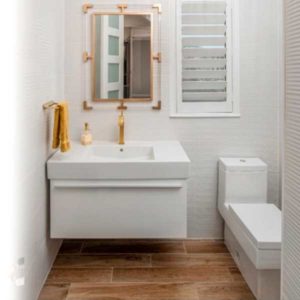
 Small bathrooms in Houston homes often feel cramped because the room has tight walls, short sightlines, and limited light. Design choices can change how the room feels.
Color, layout, lighting, and materials all shape visual space and create the illusion of a larger bathroom.
At TriFection, we remodel small bathrooms every week, and we see how the right choices help a room feel open and comfortable again. Here are ways to improve your space.
Quick Takeaways
- Use light, reflective colors to open the room.
- Replace shower curtains with frameless glass for cleaner sightlines.
- Install larger tiles to reduce visual clutter.
- Extend tile or paint upward to increase height perception.
- Use floating vanities and recessed storage to free floor space.
- Improve layered lighting to eliminate shadows.
- Keep décor simple and minimize contrast.
What Actually Makes a Small Bathroom Feel Larger
Light changes everything. Bright walls reflect light and push the room outward. Dark colors pull the room inward and make it feel tight.
Long lines, clean surfaces, and steady color help the room feel tall and wide. Visual breaks, like bold patterns or heavy décor, stop the eye and shrink the room.
Shadows do the same. If a corner stays dark, the bathroom feels smaller than it is. When you control light, color, and continuity, the room feels bigger.
1. Use Light, Reflective Colors to Brighten the Room
Soft neutrals increase visual space because they reflect light instead of absorbing it. A wall to wall color scheme with low contrast helps the bathroom feel bigger.
You can use white, sand, pale gray, or warm cream to keep the room open. Avoid dark colors unless you use them in small accents.
2. Replace Shower Curtains With Frameless Glass Doors
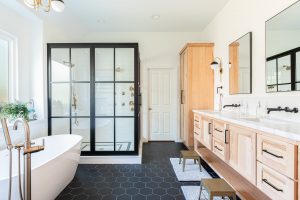
A shower curtain blocks the back wall and cuts sightlines. A frameless glass shower door opens the room and shows more space at once.
If you want privacy, frosted or textured glass still keeps the room wide while softening the view. Clear glass works best when you want the strongest illusion of a larger bathroom.
3. Choose Larger Tiles to Minimize Visual Breaks
Large format tile reduces grout lines and smooths the room. Fewer breaks mean more open space for the eye to follow. Run tiles in a direction that stretches the room.
A horizontal layout widens it. A vertical layout draws the eye upward and adds height. In a small bathroom, reducing patterns and keeping steady lines helps the room feel wide.
4. Extend Tile or Paint Upward to Add Height
Vertical lines guide the eye from floor to ceiling. Floor to ceiling tile increases height and gives the room a taller feel.
Even simple paint can do this when you keep the color steady. This works well in showers, tubs, behind vanities, or on accent walls that need more presence.
5. Improve Lighting to Eliminate Shadows
Shadows shrink space. Good lighting opens it. Use overhead lights for general brightness. Use vanity lights for faces and mirrors. Use ambient lights for dim corners.
When every part of the room stays bright, the bathroom feeling changes. Bright corners equal more visual space.
6. Install a Floating Vanity to Free Up Floor Space
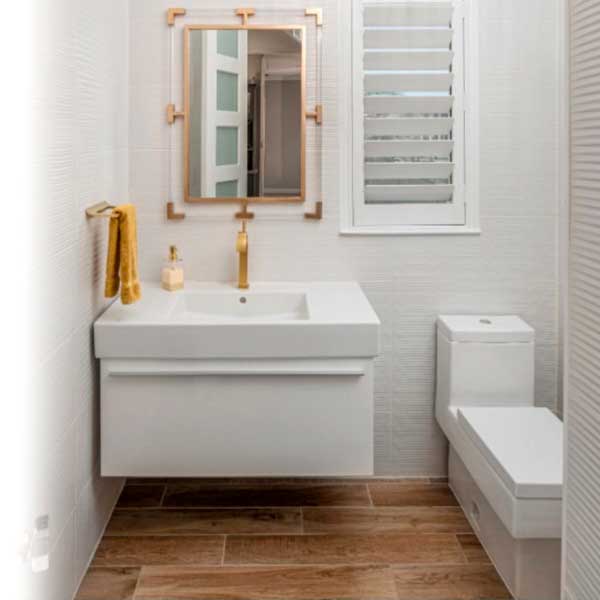
A floating vanity exposes more floor, so the room feels wider. The open floor gives the room more breathing room. A pedestal sink also works when you want the simplest base.
A traditional vanity offers storage, but it can make a small bathroom feel tight. Choose the option that gives you the space you need without adding bulk.
7. Add Recessed or Built-In Storage to Control Clutter
Recessed medicine cabinets, wall niches, and built-in shelving help remove clutter from surfaces. Floating shelves work well when you want storage without heavy cabinets.
Clean counters make the room feel bigger because the eye moves without interruption. Decluttering is the fastest free change you can make.
8. Maximize Natural Light Without Losing Privacy
Natural light opens a room more than any other feature. You can use frosted glass windows, higher windows, or light-filtering shades to protect privacy while keeping brightness. Natural light adds depth, and depth adds space.
9. Choose Slim or Low-Profile Fixtures
Compact toilets, slim vanities, and simple faucets reduce bulk. Large fixtures in a small bathroom take over the room.
Small fixtures give you the same function without the weight. Scale shapes perception, so choose pieces that keep the room light.
10. Keep the Design Simple and Unified
Too many patterns shrink a room. Strong contrasts break sightlines. Simple design helps the small bathroom feel open.
Use steady tones, matching metals, and clean shapes. When everything fits together, the room feels larger.
Should You DIY or Hire a Professional Remodeler?
Some changes are simple. You can swap a shower curtain, paint walls, add floating shelves, or install brighter bulbs.
Bigger changes call for professional help. Tile work, layout adjustments, custom storage, and glass installation need skilled hands. A remodeler has the tools and experience to open the room without mistakes.
FAQ: How to Make a Small Bathroom Look Larger
What colors make a small bathroom look bigger?
Light, soft colors reflect light and open the room.
Does tile size affect perceived space?
Yes. Large tiles reduce grout lines and expand visual space.
Do mirrors actually make a bathroom look bigger?
Yes. Mirrors reflect light and double the visual area.
What is the cheapest way to make a small bathroom feel larger?
Declutter, add light, and use soft colors.
Are glass shower doors worth it in a small bathroom?
Yes. They remove visual barriers and make the room feel wider.
Ready to Transform Your Small Bathroom? Contact TriFection
 If you want a larger bathroom feel, we can help. TriFection remodels small bathrooms in Houston and builds custom solutions that open tight layouts. We design smarter storage, better lighting, and clean finishes that make the room feel open and calm.
Reach out to schedule a consultation and see options for a space that feels better every day. We also invite you to explore our full Bathroom Remodeling services for ideas and past projects.