
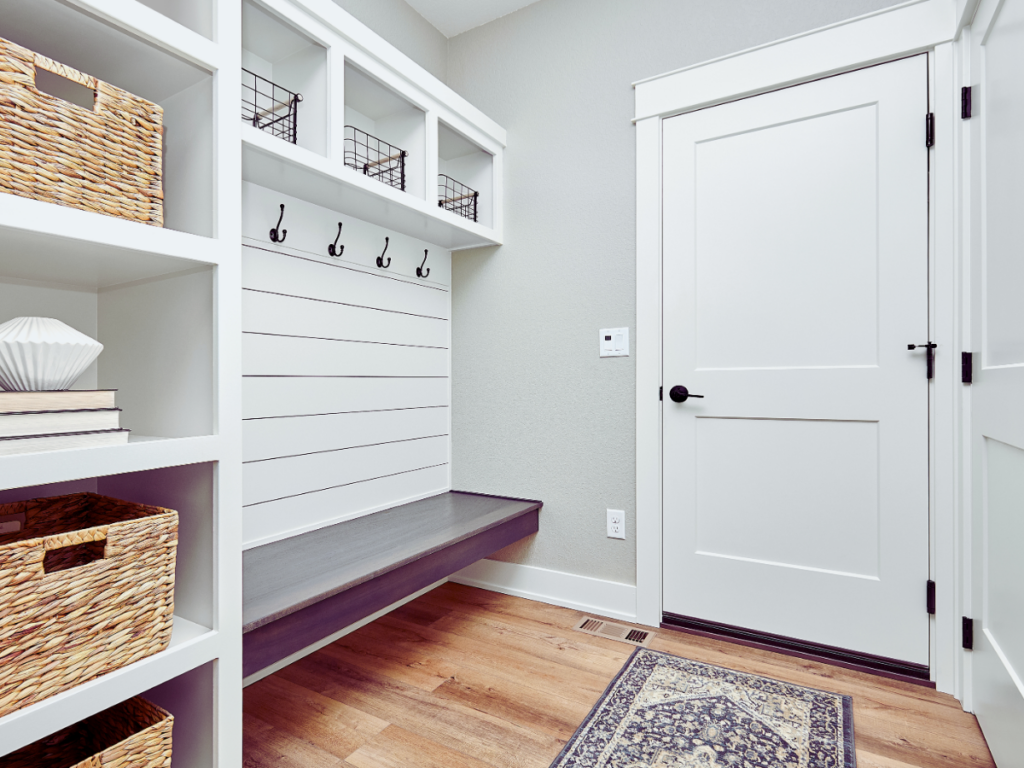
You can add a mudroom to most homes by converting space, enclosing a porch, building a bump-out, or adding a full room. The best option depends on your home’s layout, available space, budget, and how your family plans to use the mudroom.
Many older homes were not built with a dedicated mudroom. Instead, families often enter through the garage, back door, or side entrance and leave shoes, coats, and bags wherever there is room. Fortunately, there are several ways to add a mudroom without changing the character of your home.
In this guide, you’ll learn where to add a mudroom, the different remodeling options available, and the features that can make the space more useful for everyday life.
Quick Takeaways
 Most homes can accommodate a mudroom with the right design.
- Converting existing space is usually the most affordable option.
- Bump-out and full additions create more storage and flexibility.
- The best location is usually near the garage or primary family entrance.
- Built-in storage, durable flooring, and good lighting improve functionality.
- Working with a design-build remodeler helps maximize available space.
Can You Add a Mudroom to an Existing Home?
Yes. Most existing homes can accommodate a mudroom by converting unused interior space or building a small addition. Common options include converting a laundry room, enclosing a porch, building a bump-out, or adding a dedicated room near the home’s primary entrance.
The right solution depends on your home’s layout and your family’s needs. Some homeowners only need a compact space for coats and shoes. Others want a larger mudroom addition with built-in storage, laundry facilities, or even a pet washing station.
Where Can You Add a Mudroom?
Near the Garage
For many families, the garage is the main entrance into the home. Adding a mudroom between the garage and kitchen makes it easy to remove shoes. It also gives space to hang jackets and organize backpacks before entering the home.
At the Back Entry
If your family regularly uses the back door, this area is often an ideal location for adding a mudroom. It keeps dirt, wet shoes, and outdoor gear from being tracked throughout the house.
Beside the Laundry Room
Many homeowners combine a mudroom with the laundry room. This creates one practical space for laundry, storage, and cleaning up after outdoor activities.
By the Side Entrance
A side entrance can become a functional everyday entry with custom storage, seating, and durable finishes.
Converting Existing Interior Space
Not every project requires an addition. Converting an oversized hallway, unused closet, extra pantry, or underused corner can create enough space for a compact mudroom.
Ways to Add a Mudroom to an Existing Home
1. Convert an Existing Room
One of the simplest ways to add a mudroom is by converting existing space.
Potential areas include:
- Part of a laundry room
- An oversized hallway
- A large entryway
- An unused corner near an exterior door
Because the home’s footprint stays the same, this approach is often less expensive than building a mudroom addition while still providing valuable storage space.
2. Enclose a Porch
An enclosed porch can become a beautiful and functional mudroom.
This option works especially well when the porch already connects to a frequently used entrance.
Benefits include:
- Additional storage space
- Better protection from weather
- Improved energy efficiency
- A smooth transition between outdoors and indoors
Before beginning construction, it’s important to evaluate insulation, HVAC, windows, and the existing structure.
3. Build a Mudroom Bump-Out
A bump-out addition extends a small portion of your home’s exterior wall to create additional square footage.
This is a great option when your current entry area is simply too small.
Advantages include:
- More room for built-in storage
- Space for benches and cabinets
- Minimal impact compared to a full addition
- Improved traffic flow
Even a modest bump-out can dramatically improve how your family uses the space every day.
4. Add a Full Room Addition
If your family needs more storage and flexibility, a full room addition may be the best choice.
A larger mudroom addition can include:
- Built-in lockers
- Laundry facilities
- Walk-in storage
- Pet washing stations
- Pantry storage
- Additional cabinetry
A full addition also gives your designer more freedom to create a layout that fits your home’s style and your family’s needs.
5. Combine a Mudroom With Another Remodeling Project
One of the smartest ways to add a mudroom is during another remodeling project.
For example, a mudroom can easily be incorporated into a:
- Kitchen remodel
- Home addition
- Garage remodel
- Laundry room renovation
Combining projects often improves the home’s overall flow. It also lets plumbing, electrical work, flooring, and cabinetry be done at the same time.
What Features Should Every Mudroom Include?
A well-designed mudroom is about more than extra square footage. The right features help keep the space organized and easy to use.
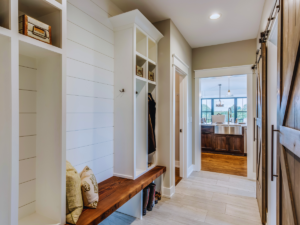 Popular features include:
- Built-in benches
- Wall hooks
- Individual cubbies
- Closed cabinets
- Tile or luxury vinyl plank flooring
- Bright lighting
- Convenient electrical outlets
- Pet washing station
- Drop zone for keys, mail, and electronics
Custom storage solutions can also be designed around your family’s daily routine.
How Much Space Do You Need for a Mudroom?
A mudroom does not need to be large to be functional.
Small Mudrooms
Compact mudrooms work well in converted spaces. With custom cabinetry and vertical storage, even a small footprint can provide excellent organization.
Medium Mudrooms
Medium-sized mudrooms often include benches, lockers, and additional cabinets while leaving enough room for comfortable movement.
Large Mudrooms
Larger mudrooms can serve multiple purposes by combining storage, laundry, pet care, and household organization into one convenient area.
The goal is not simply adding square footage. It’s creating a space that works for your family’s everyday needs.
What Should You Consider Before Adding a Mudroom?
Before adding a mudroom, think about how the space will function throughout the year.
Important considerations include:
- Traffic flow between rooms
- Existing plumbing and HVAC systems
- Natural lighting
- Current and future storage needs
- Matching the home’s exterior design
- Required permits and structural modifications
- Overall remodeling budget
Planning these details early helps avoid expensive changes later in the project.
Is Adding a Mudroom Worth It?
For many homeowners, the answer is yes.
Adding a mudroom can provide several long-term benefits, including:
- Better organization
- Cleaner floors throughout the home
- Easier daily routines
- More storage space
- Better use of underutilized areas
- Increased appeal for future buyers
While a home’s resale value depends on many factors, a well-designed mudroom can help. It can make the home more functional and attractive.
Why Work With a Design-Build Remodeling Company?
Adding a mudroom involves much more than building walls and installing cabinets.
A design-build remodeling company manages every phase of the project, including design, planning, permitting, and construction.
Working with one experienced team offers several advantages:
- Integrated design and construction
- Custom storage solutions tailored to your family
- A finished space that complements your home’s architecture
- Permit coordination and code compliance
- Clear communication from concept through completion
The result is a mudroom that looks intentional rather than like an afterthought.
Frequently Asked Questions
Can you add a mudroom without building an addition?
Yes. Many homeowners add a mudroom by converting existing space such as part of a laundry room, hallway, entryway, or unused corner near an exterior door.
Where is the best place to put a mudroom?
The best location is usually near the garage, back door, or another entrance your family uses every day.
How big should a mudroom be?
There is no standard size. Even a small mudroom can provide plenty of storage when designed with built-in cabinets, benches, and vertical storage.
Can a mudroom include a laundry room?
Yes. Combining a mudroom and laundry room is a popular design because it creates one convenient area for cleaning, storage, and household organization.
Do mudrooms add value to a home?
A well-designed mudroom can improve everyday functionality, increase storage space, and make a home more appealing to future buyers.
Transform Everyday Living With a Custom Mudroom
 Every home offers different opportunities for adding a mudroom. Whether you’re updating an existing space, adding a small bump-out, or planning a full mudroom addition, good design helps. It can improve organization, add storage space, and make daily life easier.
At Trifection Remodeling & Construction, we help Houston homeowners create custom mudrooms that blend seamlessly with their existing homes. From the first design consultation through construction, our design-build team works with you to create a space that fits your family’s lifestyle while complementing your home’s architecture.
If you’re ready to add a mudroom that is both beautiful and functional, contact Trifection Remodeling to start planning your room addition project.