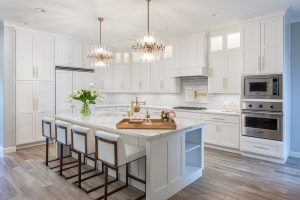
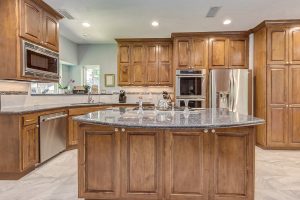
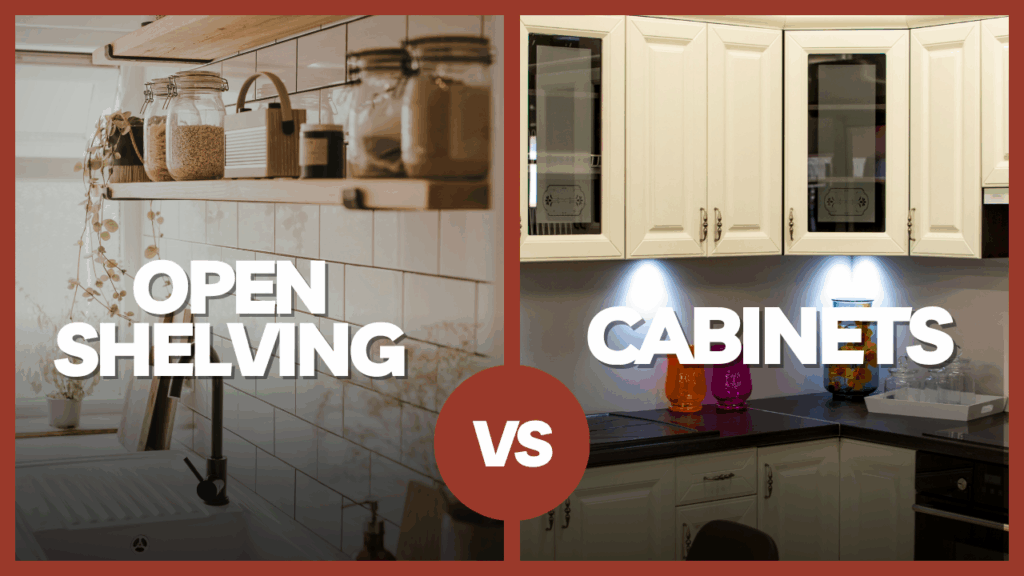
Open shelving gives a kitchen a light, open feel. Kitchen cabinets offer structure and storage space behind closed doors.
Most people think they have to choose one. They don’t. The best choice often comes from mixing both.
The goal here is simple: help you decide which setup fits your habits, your layout, and your plans for a kitchen remodel.
Quick Takeaways
- Open shelving makes a kitchen feel larger and gives you easy access, but it needs more cleaning.
- Kitchen cabinets add strong storage solutions, durability, and organization, but they can make small kitchens feel closed-in.
- Most homeowners get the best results from a hybrid layout that uses cabinets for bulk storage and open shelves for style.
- Your cooking habits, clutter tolerance, and budget guide the decision.
What Is Open Kitchen Shelving?
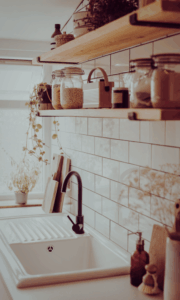 Open shelving is simple. It’s a shelf mounted on the wall that holds dishes, mugs, or decor. Everything stays in plain sight. You grab what you need without moving a door.
Open shelving works best on light-use walls where you place items you reach for often. Everyday bowls. Coffee mugs. Glasses.
It also works near windows or corners where a full cabinet would feel bulky.
Where does it struggle? Any wall that sees heavy cooking. Once grease, humidity, and steam enter the conversation, every item on a shelf becomes a cleaning project. Houston humidity only increases that.
Pros of Open Shelving
Creates a More Open and Airy Look
Open shelves remove visual bulk. They make the kitchen feel bigger, brighter, and more relaxed. This alone is the main reason many homeowners consider them.
Improves Accessibility for Everyday Items
You see everything. You reach and grab. The flow feels smooth and quick. If you want a kitchen that moves fast during busy mornings, open shelves help.
Lowers Material Cost Compared to Full Cabinet Runs
Shelves require less material than full wall cabinets. This helps if you want a budget-friendly update without touching the whole room.
Makes Styling and Personalization Easy
You can put your personality on the wall. Plates, plants, cookbooks, small pieces of decor. The kitchen becomes warmer and more lived-in.
Ideal for Small or Awkward Wall Spaces
Some walls don’t hold full cabinets well. A small shelf solves the issue while keeping the layout clean.
Cons of Open Shelving
Requires Frequent Dusting and Cleaning
Everything sits in the open. Dust lands on it. Grease settles on it. You clean more than you expect.
Shows Clutter and Visual Mess Instantly
If you stack items in a rush or mix too many colors, the kitchen feel changes fast. Open shelving gives you freedom but also demands discipline.
Provides Less Storage Than Upper Cabinets
Shelves hold fewer items. They offer less depth and less support. This matters in a kitchen that handles a lot of daily cooking.
Can Look Trendy Rather Than Timeless
Design trends shift. What looks fresh today might feel dated later. Some homeowners love that freedom. Others don’t.
May Not Complement Traditional or Classic Kitchens
Classic trim and detailed designs often look better with traditional closed cabinets.
What Are Traditional Kitchen Cabinets?
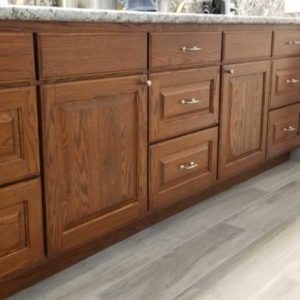 Traditional cabinets include base cabinets, wall cabinets, and full-height pantry units. They use doors to hide your tools, dishes, small appliances, and everything else you store.
Cabinets dominate modern kitchen design because they offer predictable organization. They hold weight. They protect items from grease and humidity. They create a layout that stays functional for decades.
Pros of Kitchen Cabinets
Maximizes Enclosed Storage
Cabinets create strong, enclosed storage space. They hold your heavy pans, stacked dishes, and small appliances without strain.
Protects Items from Grease, Dust, and Humidity
Closed doors do the heavy lifting. You clean the door, not every item inside.
Supports a Wide Range of Styles and Finishes
Cabinets adapt to any design. Modern, traditional, farmhouse, transitional. You change the look through the cabinet door style and hardware.
Reduces Visual Clutter
Cabinets create calm. They let you store the chaos behind a single clean line.
Offers Custom Organization Options
Pull-outs, spice racks, dividers, and other solutions help you control how the kitchen works.
Cons of Kitchen Cabinets
Higher Upfront Cost
More material. More installation. Higher price.
Can Make Small Kitchens Feel Boxy
Full upper cabinets create weight on the wall. Some kitchens feel smaller because of this.
Requires a Thoughtful Layout
Poor cabinet placement leads to wasted corners or cramped movement.
May Limit Styling Opportunities Without Glass Panels
If you want display space, you need glass doors or shelves.
Which Option Is Best for Your Kitchen?
If You Want Low Maintenance → Choose Cabinets
Cabinets keep things simple and clean.
- If You Want a Modern, Light Look → Choose Open Shelving
- If You Cook Daily → Choose Cabinets With Limited Open Shelves
- If You Prefer Displaying Decor → Use Open Shelving Strategically
- If Your Kitchen Is Small → Use a Hybrid Layout
Why a Hybrid Kitchen Works Best
Most homeowners end up here. A mix of open shelving and closed cabinets gives you the best of both approaches.
Use Cabinets for Bulk Storage
Heavier items, appliances, and pantry staples belong behind doors.
Use Open Shelving for Daily Items and Style
Everyday dishes sit within reach. Decor adds warmth.
Use Glass-Front Cabinets if You Want a Middle Ground
They feel open but still protect your items.
Keep Shelving Away From Grease Zones
Place shelves where you won’t fight constant cleaning.
Match Finishes for a Clean Design
Consistent details tie everything together.
Mistakes Homeowners Commonly Make
Removing Too Many Cabinets
Storage loss hurts more than expected.
Putting Shelving Near a Cooktop
Heat and oil make everything harder to maintain.
Ignoring Weight Support
Shelves must handle the items you plan to place on them.
Mixing Styles Without Thought
A kitchen needs a clear design direction.
Overlooking Houston Humidity
Moisture changes how often you clean and how your materials age.
How Houston Homes Influence the Decision
Houston homes see a lot of cooking, hosting, and family traffic. That means more tools, more dishes, and more storage needs.
High Cooking Frequency
More meals mean more cookware that needs enclosed storage.
Humidity and Grease Build-Up
Shelves need extra cleaning in humid climates.
Typical Suburban Layouts Favor Cabinets
Many Houston kitchens use long walls designed for upper cabinets.
Larger Homes Support Mixed Storage
In bigger spaces, shelves and cabinets blend well.
When to Use Open Shelving in a Houston Kitchen
- On empty end walls
- Near windows
- In light-use zones
- For your everyday mugs, bowls, and glasses
When to Use Cabinets Instead
- Over ranges or cooktops
- In busy kitchens with kids or guests
- For appliances and heavy cookware
- In rentals or multi-use homes
- In humid rooms without strong ventilation
FAQs
Is open shelving cheaper than cabinets?
Yes. Shelves use less material and cost less to install.
Does open shelving work in small kitchens?
Yes, when limited to small sections that open the room without taking away needed storage.
How much storage do I lose without upper cabinets?
A lot. Upper cabinets create major storage space.
Can I mix open shelves and cabinets?
Yes. Most homeowners do.
Are open shelves hard to clean in Houston?
Yes. Humidity speeds up dust and grease buildup.
What’s the best setup for heavy cooking?
Mostly cabinets with a few shelves for daily items.
Upgrade Your Kitchen With TriFection
 If you want a kitchen that fits your lifestyle, we can help. Schedule a free design consultation and talk through your vision with our team.
We build custom cabinets, design smart layouts, and create kitchens that feel natural and easy to live in. TriFection delivers remodeling perfection, one kitchen at a time. Let’s start shaping your new kitchen today.