
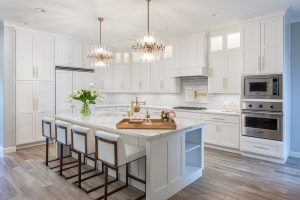
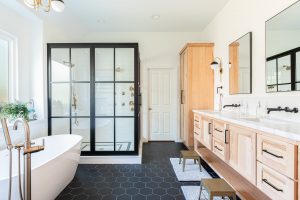
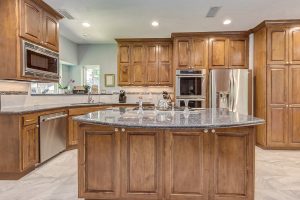
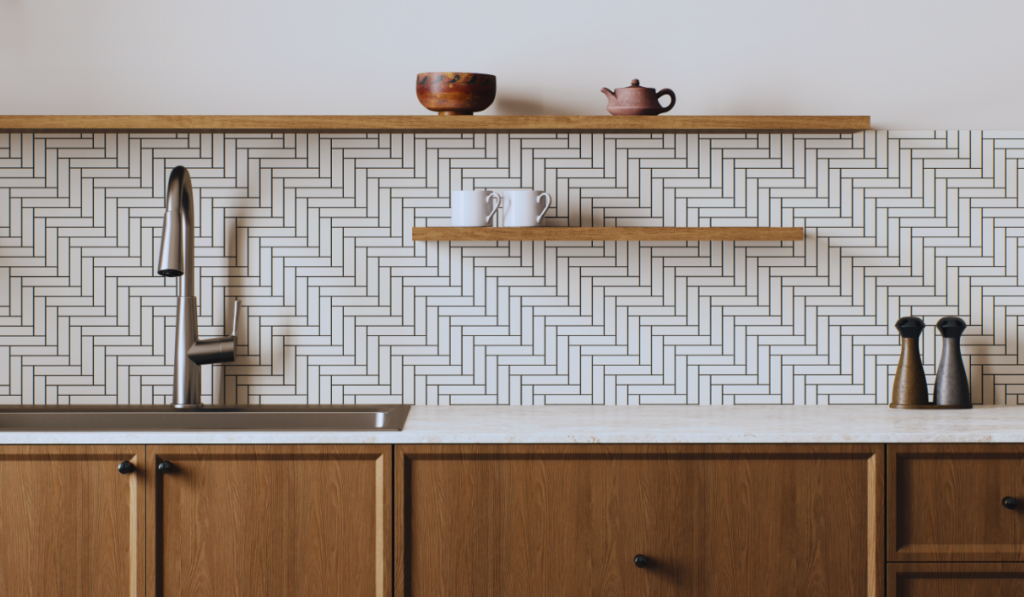
 Modern life is noisy. Your kitchen doesn’t have to be.
Minimalist kitchen design means cutting out what you don’t need. It focuses on clean lines, neutral color palettes, and functional simplicity.
In 2025, more people are moving toward minimalism for practical reasons: sustainability, space-saving, and mental clarity.
This guide covers the basics, design tips, size-specific ideas, mistakes to avoid, benefits, and FAQs.
What Is Minimalist Kitchen Design?
Minimalist kitchens follow one rule: less but better. Every detail matters, and nothing is extra. These kitchens avoid clutter, visual noise, and unneeded items.
Compared to traditional or maximalist styles, minimalist kitchens feel open and quiet. You won’t see ornate trim or bold colors. Instead, you get symmetry, simple forms, and smooth textures.
This approach takes cues from Japanese and Scandinavian design. It’s about calm, balance, and purpose. Clean lines help your mind stay clear. That’s why minimalist kitchens feel peaceful even during a busy dinner rush.
Core Elements of a Minimalist Kitchen
Minimalist kitchens don’t rely on decorations. They rely on smart design. Here are the five core elements:
Streamlined Cabinetry
Cabinets set the tone. Go for flat-panel or slab fronts. Use push-to-open doors or thin pulls that blend in. Keep everything flush and clean.
Neutral Color Schemes
Stick with a soft, simple palette. White, beige, charcoal, sage, and soft black all work. Want warmth? Use warmer grays or off-whites. Want cooler? Stick with icy tones.
Smart Storage Solutions
Minimalist kitchens don’t work if clutter sits on your counter. Use hidden storage to keep things clean.
Pull-out drawers, dividers, vertical cabinets, and pantry organizers help. Tuck away your coffee maker. Keep the visual field clear.
Functional Layouts
Stick to the kitchen triangle rule: sink, stove, and fridge in easy reach. Choose between open shelving or closed cabinets, but don’t mix too much. Use consistent spacing. Make the kitchen easy to walk through.
Integrated Appliances
Use appliances that blend into the design. Panel-ready fridges, wall ovens, and dishwashers disappear behind clean cabinet faces. Choose between matte or glossy stainless steel depending on your style.
Design Tips from Interior Experts
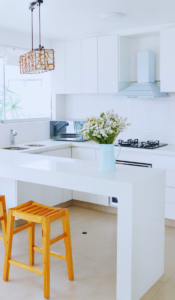 Planning a minimalist kitchen takes thought. Here’s how to do it right:
- Start by removing what you don’t need.
- Match materials to your goals. Wood warms up a space. Stone adds texture.
- Avoid combining too many finishes. Stick to 1-2 consistent looks.
- Matte surfaces hide smudges. Gloss adds reflection.
- Use natural light to open the room.
- Add under-cabinet lighting or track lighting for tasks.
- Choose hardware, fixtures, and appliances that match in tone.
A minimalist kitchen should feel comfortable, not cold.
Minimalist Kitchen Design by Size
Every kitchen can be minimalist. But how you design it depends on the space.
Small Kitchens
Use vertical space. Go for tall cabinets. Keep color light to make the room feel larger. Hide as much as possible. Avoid open shelving unless it’s perfectly organized.
Medium Kitchens
Create zones. One for prep, one for cooking, one for storage. Use consistent cabinet lines to tie the space together. Add a kitchen island only if it serves real function.
Large Kitchens
Don’t overdo the empty space. Add texture with wood grains, stone counters, or brushed metal. Keep balance with warm light and a neutral base. Avoid a showroom feel.
Common Mistakes in Minimalist Kitchen Design
Too much simplicity becomes a problem. Here are four things to avoid:
- Cutting out too much storage. You’ll end up with clutter.
- Using only cold colors or hard materials. It feels sterile.
- Skipping good lighting. A dark kitchen hides the details.
- Mixing too many design styles. Minimalism relies on unity.
Benefits of a Minimalist Kitchen
Minimalist kitchens do more than look clean. Here’s why they’re worth it:
- Fewer items make cleaning easier.
- The space feels calm and focused.
- Simple design ages well.
- Cooking flows better with less in the way.
- Minimalist kitchens improve resale appeal.
FAQs
How do I make my kitchen minimalist?
Start by removing what you don’t use. Stick to neutral colors. Hide small appliances. Choose cabinets without visible hardware.
How do I choose colors?
Pick 2-3 base shades. One main neutral, one contrast (like black or wood), and one accent. Keep it simple.
Can a small kitchen be minimalist?
Yes. In fact, small kitchens benefit the most. Use tall cabinets, hidden storage, and light colors.
What’s the best lighting for a minimalist space?
Use natural light if you can. Add task lighting under cabinets. Choose fixtures that blend in.
Can minimalist kitchen design work with smart technology?
Yes. You can add smart lighting, connected appliances, and voice-controlled devices while keeping the design clean. Just hide cords and hubs.
Build a Kitchen That Works with TriFection
 Minimalist kitchen design isn’t about less. It’s about choosing the right things and cutting out the rest.
Look at your kitchen. What feels useful? What feels like noise?
If you’re in Houston, TX or nearby and want help with a kitchen remodel, reach out to TriFection. Our team can help you design a kitchen that looks clean, works well, and lasts.